


 Deutsch
 English
 Español
 Français
 Nederlands
 Português


 Share
Share




China's 2025-2026 export control regime on rare earths, tungsten, and antimony has sent prices surging up to sixfold and exposed deep Western dependency, with over 80% of European firms reliant on Chinese supply chains for materials essential to defense, EVs, and renewables. This analysis examines how Beijing is weaponizing processing dominance rather than scarcity, using reversible restrictions to extract strategic concessions while the EU and U.S. struggle to scale alternative supply chains within a narrowing 12-18 month geopolitical window.
Context: The Scale of China's Dominance
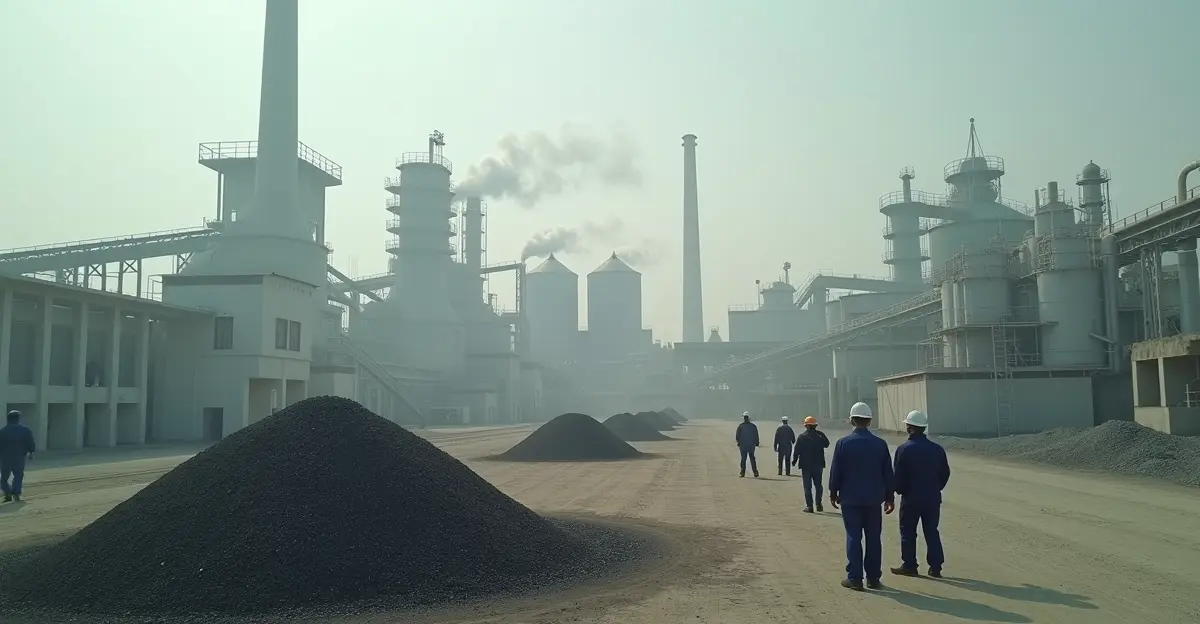
China controls approximately 90% of global rare earth processing, 80% of tungsten, and 60% of antimony — materials critical for permanent magnets in EV motors, wind turbines, precision-guided munitions, and fiber optics. Unlike traditional commodity leverage based on resource scarcity, Beijing's power derives from its near-monopoly on mid-stream processing. This processing chokehold means that even if Western nations mine rare earths elsewhere, they still must send them to China for separation and refining.
The rare earth processing monopoly has been decades in the making. Since the 1970s, China invested heavily in refining capacity while environmental regulations and high costs drove competitors in the U.S., Europe, and Japan out of the market. Today, the only significant non-Chinese rare earth processor is MP Materials in California, which still ships concentrate to China for final separation.
How Export Controls Work: Reversible Restrictions as a Strategic Tool
China's export control regime, updated in 2025 and expanded in early 2026, operates through a licensing system that grants Beijing granular, reversible leverage. Rather than imposing outright bans — which would trigger WTO disputes and accelerate Western alternatives — China has reduced licensing approval rates for European and U.S. firms to below 25% in some sectors, while maintaining steady supply to domestic industries and friendly nations.
This approach creates maximum uncertainty for Western manufacturers. Companies cannot plan production schedules or secure financing for alternative supply chains when they don't know whether next quarter's licenses will be approved. The unpredictability itself functions as a deterrent to investment in critical mineral supply chain diversification.
According to a multi-institutional analysis published in early 2026, prices for neodymium and praseodymium — key rare earths for magnets — surged sixfold outside China between mid-2025 and early 2026. Tungsten prices tripled, and antimony prices quadrupled. Meanwhile, Chinese domestic prices remained stable, giving Chinese manufacturers a massive cost advantage in downstream products like EV motors and defense electronics.
Western Response: The 12-18 Month Window
The U.S. and EU have recognized the urgency. On February 4, 2026, Secretary of State Marco Rubio hosted the 2026 Critical Minerals Ministerial with 54 countries, announcing FORGE (Forum on Resource Geostrategic Engagement) as the successor to the Minerals Security Partnership. The U.S. government has mobilized over $30 billion in letters of interest, investments, and loans for critical mineral supply chain projects over the past six months, including President Trump's Project Vault — a $10 billion EXIM direct loan establishing a domestic strategic reserve.
The EU has launched a strategic partnership with the U.S. on critical minerals, aiming to align standards, facilitate investment, and support recycling. The EU Critical Raw Materials Act sets targets for 10% of annual consumption from domestic mining and 40% from processing by 2030 — but these targets remain aspirational given the 20-30 year timeline typically required to build new processing capacity.
The EU-US critical minerals partnership represents a significant step, but analysts warn that the window for meaningful action is narrowing to 12-18 months. If China perceives that Western alternatives are gaining traction, it could tighten restrictions further or impose outright export bans, potentially crippling European and American defense and green energy production.
Three Strategic Paths Ahead
Experts identify three possible trajectories for Western nations:
Path 1: Managed Dependence
Western nations accept continued reliance on Chinese processing while negotiating for more predictable access. This path offers short-term stability but leaves strategic vulnerabilities intact. China would likely demand concessions on technology transfer, trade policy, or geopolitical alignment in exchange for guaranteed supply.
Path 2: Costly Independence
Massive investment in domestic and allied processing capacity, supported by government subsidies and strategic reserves. The Council on Foreign Relations estimates this would require $50-100 billion over 10-15 years and would still leave gaps in specialized processing. The advantage is strategic autonomy; the cost is significantly higher prices for critical minerals and potential trade conflicts.
Path 3: Hybrid Model with Leapfrog Innovation
A Council on Foreign Relations report recommends a leapfrog strategy focused on innovation rather than trying to out-mine or out-process China. Key elements include developing rare-earth-free magnets, scaling waste-based recovery from mine tailings, advancing e-waste recycling, and using AI-enabled materials research to discover substitutes. This approach could reduce dependence faster than traditional mining expansion and could be embedded into allied frameworks like FORGE.
Impact on Global Trade and Energy Transition
The implications extend far beyond geopolitics. Rare earths are essential for the permanent magnets in EV motors and wind turbine generators — two cornerstone technologies of the energy transition. If prices remain elevated and supply uncertain, automakers and renewable energy developers may face delays and cost overruns that slow decarbonization timelines.
The energy transition critical minerals demand is projected to quadruple by 2040 according to the International Energy Agency. Without diversified supply chains, this demand will only deepen Western dependence on Chinese processing.
Defense applications are equally concerning. Tungsten is used in armor-piercing munitions and missile components; antimony is critical for infrared sensors and night-vision equipment. The Pentagon has identified rare earths as the single most critical supply chain vulnerability for U.S. defense systems.
Expert Perspectives
"China is not weaponizing scarcity — it's weaponizing control," said Dr. Li Wei, a trade policy analyst at the European Centre for International Political Economy. "By keeping domestic prices low while squeezing foreign access, Beijing ensures its own industries thrive while competitors struggle. This is industrial policy by export control."
"The 12-18 month window is real," warned former U.S. Deputy Assistant Secretary of Defense for Industrial Policy, speaking on condition of anonymity. "If we don't show tangible progress on alternative processing capacity by mid-2027, China will have no incentive to moderate its restrictions. They'll tighten the screws."
FAQ
What critical minerals does China control?
China controls approximately 90% of global rare earth processing, 80% of tungsten processing, and 60% of antimony processing. These minerals are essential for EVs, wind turbines, defense systems, and electronics.
How have China's export controls affected prices?
Prices for key rare earths like neodymium and praseodymium surged up to sixfold outside China between mid-2025 and early 2026. Tungsten prices tripled and antimony prices quadrupled during the same period.
What is the U.S. doing to reduce dependence?
The U.S. has launched FORGE, a 54-country initiative to coordinate critical mineral supply chains, and mobilized over $30 billion in investments. Project Vault establishes a $10 billion domestic strategic reserve.
Can the EU and U.S. build alternative supply chains quickly?
Building new processing capacity typically takes 20-30 years. However, leapfrog strategies focusing on recycling, substitutes, and AI-enabled materials research could reduce dependence faster.
What are the three strategic paths for Western nations?
The three paths are: (1) managed dependence — negotiating for predictable Chinese supply; (2) costly independence — massive investment in domestic processing; and (3) a hybrid model combining innovation, recycling, and strategic reserves.
Conclusion: The Geopolitical Window Is Closing
The World Economic Forum's 2026 Global Risks Report identifies geoeconomic confrontation as the top short-term risk. China's export controls on critical minerals exemplify this trend, using processing dominance to reshape global supply chains in real time. The next 12-18 months will determine whether Western nations can build credible alternatives or must accept prolonged strategic vulnerability. The choice between managed dependence, costly independence, or a hybrid innovation-led model will define not only trade relationships but also the pace of the energy transition and the security of defense supply chains for decades to come.

Follow Discussion